Ask a sweep what causes most of the trouble we find in Arvada flues and you will not hear about a brand of stove or a style of chimney. You will hear about wet wood. Very nearly every heavy creosote deposit this shop brushes out began life as a log that went on the fire before it was ready.
Which makes firewood a chimney subject, even though it never goes near the roof. Here is what the trade knows about buying it, drying it, stacking it and burning it, with the particular wrinkles that come of living a mile above the sea.
What seasoned actually means
Seasoned is not a marketing word, although it gets used as one on plenty of roadside signs. It means the wood has dried until its moisture content sits at or below roughly twenty percent. Fresh-cut green wood can carry half its weight in water.
The number matters because every drop of water in a log has to be boiled off before the wood itself can burn properly, and the energy for that comes out of your fire rather than out into your room. So a wet log burns cool. A cool fire does not fully combust the smoke it makes, and unburned smoke condenses on the first cold surface it meets, which is the inside of your flue. That condensate is creosote.
The chain runs: wet wood, cool fire, more smoke, more creosote, more risk of a flue fire and more frequent sweeping. Dry wood breaks it at the first link.
How long the drying really takes
Split and stacked properly, most softwoods want something like six months. Dense woods want a year or more. Rounds left unsplit can sit out for years and still be wet through the middle, because bark is built to keep water inside a tree.
Our climate helps here. Arvada's dry air and long sunny stretches pull moisture out of a stack faster than a damp climate ever would, and a well-sited stack through one Front Range summer does a great deal of the work for you. Wood bought in August for the same winter is usually a gamble. Wood bought in spring, split and stacked through the summer, is generally ready when you want it.
The woods you will actually meet around here
Most firewood advice leans heavily on oak, hickory and hard maple. Those are eastern woods. Around Arvada they turn up rarely and are priced accordingly. What is actually on offer looks more like this.
Ponderosa and lodgepole pine. Common, easy to split, quick to season. Less dense, so it burns through faster and gives less heat per armful.
Douglas fir and spruce. A step up in density from pine and widely available. A sensible middle choice for most hearths.
Pinon and juniper. Denser, longer burning and strongly aromatic. Juniper in particular is a favorite for an evening fire. Both tend to cost more than pine.
Cottonwood and elm. Often free by way of a neighbor's fallen limb. Cottonwood is light and burns fast for modest heat. Elm is stringy and genuinely unpleasant to split by hand.
Aspen. Light and quick to dry, fine for a shoulder-season fire, gone from the grate before you have settled down.
Fruitwood, if you come across it. Apple and cherry from an old orchard tree burn beautifully and smell better than anything else on this list.
The pine question, settled
Somebody will tell you never to burn pine because it causes creosote. It is the most persistent myth in this trade, and it is wrong in an interesting way.
Pine is resinous, and resin does burn dirtier while it is still in the wood. But most of that resin goes off during seasoning, and the far bigger factor in creosote is water, not species. Properly seasoned pine burns cleaner than oak that came down last month. Wet oak will foul a flue faster than dry pine every single time.
What is fair to say about pine is this. It is less dense, so you burn more of it for the same heat, and more fuel through the flue means more residue across a season even when every fire is a clean one. It also throws more sparks, which is a real argument for a cap with a proper spark screen. Burn it dry, sweep on schedule, and pine is perfectly good fuel in a state largely forested with the stuff.
Why thin air changes your fire
Here is the part most firewood guides never mention, and it matters at our elevation.
Arvada sits a little over five thousand three hundred feet. The air up here is meaningfully thinner than at sea level, so every breath the fire takes carries less oxygen with it. Less oxygen makes complete combustion harder to achieve, and incomplete combustion is precisely what leaves deposits behind in a flue.
The practical upshot is that a fire at this altitude wants more air than the same fire would want at sea level. Open the air control further than flatland advice suggests. Build fires that burn hot and bright rather than smoldering low and slow through the night. A damped-down, oxygen-starved fire is the single most effective way to line a flue with creosote, and altitude only sharpens the effect.
That same thin air takes the edge off your draft as well. A chimney pulls because the hot gas inside it is lighter than the cold air outside, and up here there is simply less of both to work with, so the gap doing the pulling is a narrower one. A flue that would pull perfectly well out on the plains can be sluggish up here, which is one reason a properly sized liner earns its keep in Colorado houses.
Stacking so the wood actually dries
A pile is not a stack, and the difference between them is months of drying time.
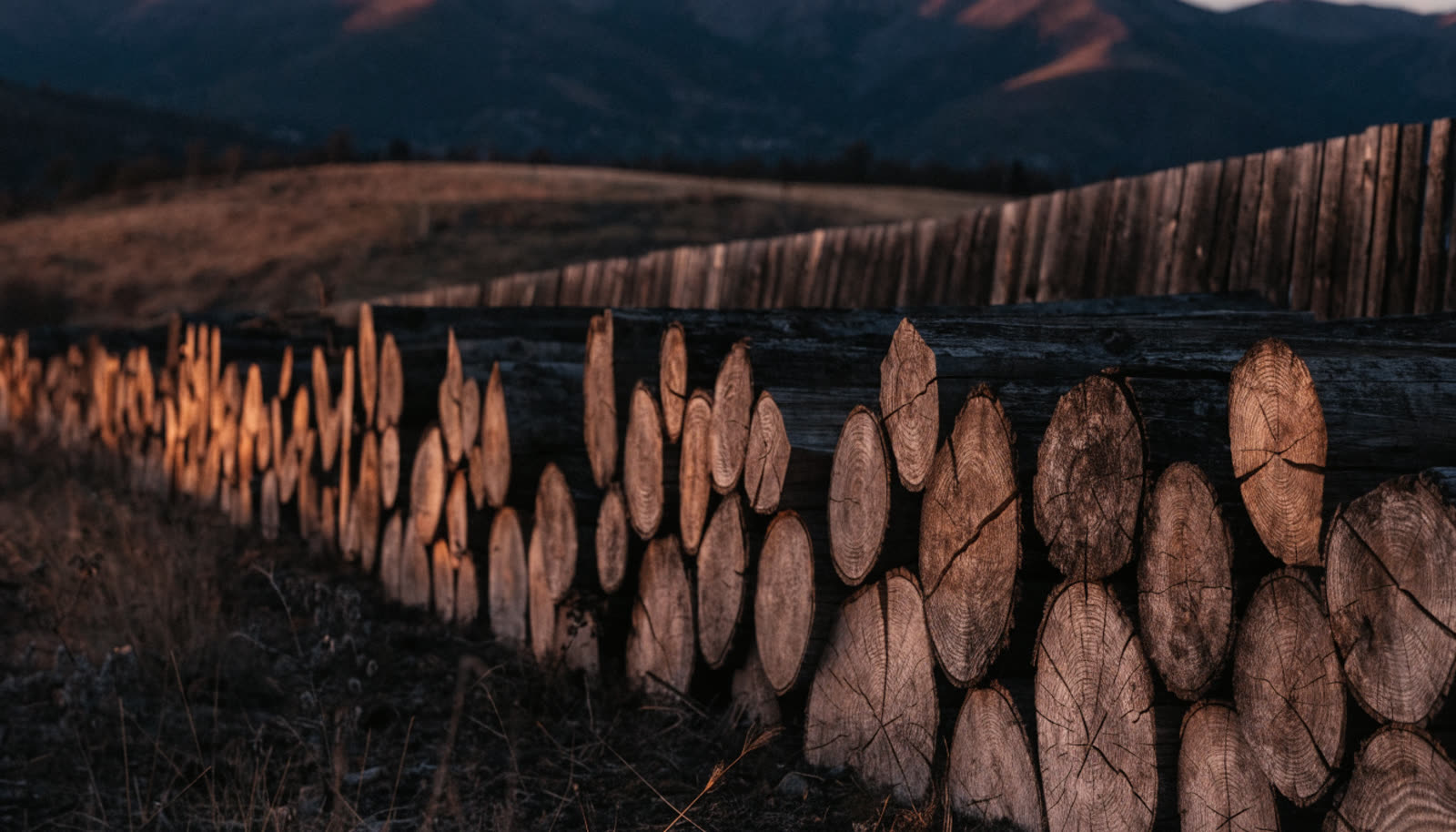
Split it first. Splitting opens the face of the wood, and water leaves through the ends and the split faces far faster than it ever passes through bark. Get the wood up off the ground on pallets or rails so the bottom row is not wicking moisture back up out of the soil. Leave gaps between the rows and let air move through them. Face the stack to the sun and the prevailing wind if the yard allows for it.
Cover the top only. A tarp thrown over a whole stack turns it into a sweat lodge and seals the moisture in rather than letting it out. The top course wants protecting from snow and rain. The sides want to breathe.
Keep the stack well away from the house. Firewood is habitat, and a cord stacked against the siding is a standing invitation to insects and rodents. It is also, through a dry Front Range summer, a good deal of fuel sitting against your wall.
Telling dry wood from wet without a meter
A moisture meter costs little and settles the argument outright, and it is worth owning if you burn regularly. Without one, use your senses.
Look at the ends. Dry wood shows radial cracks running out from the center like the spokes of a wheel. Check the color. Seasoned wood grays off and loses the bright creamy look of fresh sapwood, and the bark loosens and often drops away. Judge the weight, because a dry split feels noticeably lighter than a green one of the same size. Knock two pieces together: dry wood gives a sharp, hollow crack, while wet wood answers with a dull thud. And listen at the fire itself. Hissing and bubbling from the end grain means you are boiling water rather than burning wood.
What poor fuel costs you in the end
Burning wet wood is expensive in ways that do not show up until later. You get less heat from every cord, so you buy more wood. You lay down creosote faster, so the flue wants sweeping more often. Left long enough that residue glazes into a hard tarry layer that ordinary brushing will not lift, and taking it off becomes a job of its own. Glazed creosote is also precisely the fuel a chimney fire runs on.
Good fuel is the cheapest chimney maintenance there is. Buy it early, split it, stack it properly, give it a summer and then burn it hot.
Frequently asked about firewood
How much firewood does a Colorado winter take?
That depends entirely on whether the fire is your main heat or an evening pleasure. A household burning most evenings through the season commonly works through several cords, while a hearth lit on weekends and holidays may not finish one. Softwoods go faster than dense woods for the same warmth, so a pine-burning household should plan on more volume.
Can I burn wood I just cut down myself?
Not this season. A tree that came down in your yard this month is green whatever species it happens to be, and it wants splitting and stacking through at least one summer before it belongs on a fire. Cut it now and burn it next winter.
What should never go in the fireplace?
Treated, painted or manufactured lumber, all of which release harmful compounds as they burn. Driftwood, for the salt in it. Wet or rotten wood, which barely burns at all. Cardboard, wrapping paper and old Christmas trees, which flare up and throw embers. And never household trash or plastics of any kind.
Do hot fires clean the chimney out?
No, and the belief does real damage. Hot, clean fires slow the rate at which creosote forms, which is well worth doing, but they will not remove what is already sitting on the flue wall. Deliberately running a very hot fire to burn deposits out is how flue fires get started. Brushes take creosote off. Heat does not.
How often should the chimney be swept if I burn all winter?
Once a year is the baseline for any working fireplace, and a household burning most evenings should have the flue looked at annually without fail. The right interval for your house comes from what is actually in your flue, which is what the no-charge look is for.