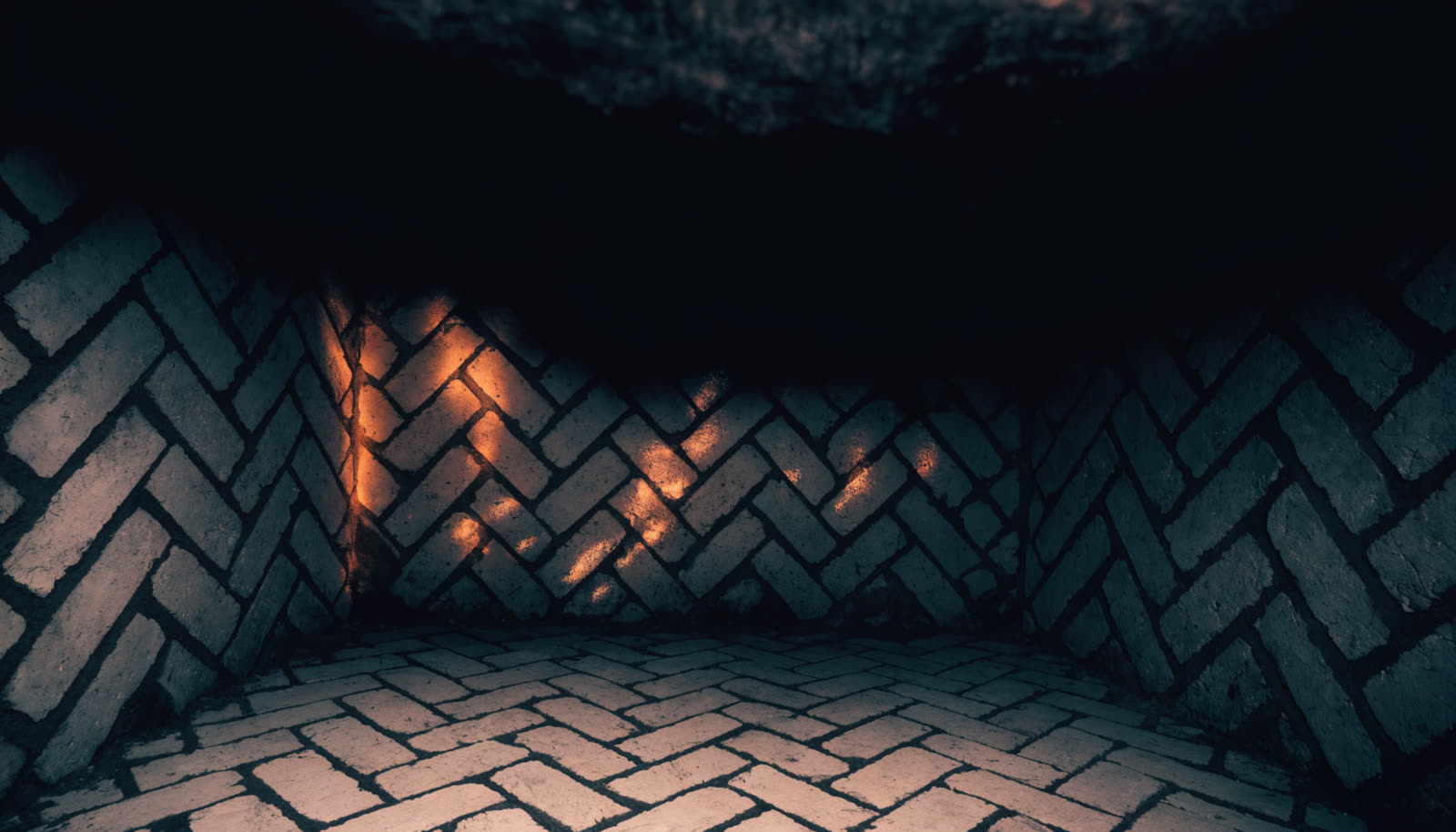
The firebox is where the fire actually lives, and it is built special for the job: firebrick that shrugs off heat that would crack common brick, laid in refractory mortar made for the same duty. But nothing that holds fire holds it forever. Joints turn to powder, firebrick cracks and drops from the walls, and gaps open that let heat reach parts of the house that were never meant to feel it. Firebox repair puts the burn chamber back to its full duty.
The work is honest masonry at close quarters. Spent firebrick gets lifted out and relaid, refractory joints get struck fresh, and any heat damage gets traced to its source rather than papered over, because a cracked firebox is sometimes the messenger for trouble behind it. The rebuild is done to the safety standard, and it is done so the new work sits handsomely beside the old.
Why fireboxes fail
Heat works the box hard: every fire expands the masonry and every cold night draws it back, and the refractory joints slowly grind to powder under the cycling. Water is the quieter culprit, finding its way down an uncapped or poorly crowned flue and soaking the firebrick, so the next hot fire steams it apart from within. That is why a failing firebox so often points upward, to the cap and crown, and why we read the whole stack before rebuilding the bottom of it.
The signs the box is asking
- Firebrick cracked, spalling or dropping loose from the walls of the box.
- Joints inside the box gone to powder, carving out at a touch.
- A gap that glows when the fire is going. Stop burning and call; that one does not wait.
- Scorched paint or trim around the fireplace opening.
Rebuilds that respect the room
A firebox rebuild can be invisible or it can be the occasion to set things right that were never right: a box relaid to match the original brick, a hearth made whole again. Where the fireplace itself wants broader work, that is fireplace care and installs, and where the damage climbs into the flue, relining joins the job. One crew carries all three trades, so the work meets in the middle instead of falling between contractors.
What firebox work costs
A few joints struck fresh is modest work; a full rebuild is a proper undertaking. Which one your box needs is what the free look establishes, and the price arrives in writing before a tool comes off the truck. The pricing page explains the whole method.
Frequently asked about firebox repair
Can I keep using the fireplace with a cracked firebox?
Small hairline crazing in firebrick faces is common and often harmless, but open joints, loose brick or any gap that shows glow means the box is no longer containing the fire properly, and it should rest until it is seen. The look is free, so there is no reason to gamble a winter on a guess.
Why does firebox repair need special mortar?
Ordinary mortar cooks, shrinks and falls out of a firebox in a season. Refractory mortar is made to live against flame, holding its grip through the heat cycling that destroys the common stuff. Using the right material is the difference between a repair and a repeat visit.
My fireplace smokes since the firebox started crumbling. Are they connected?
Often, yes. A rough, broken firebox and smoke chamber slow and tumble the air on its way up, and the draft sours. Rebuilding the box smooth and true frequently steadies a smoky fireplace, and the inspection will tell us whether the box, the flue or the chimney top is the true culprit.