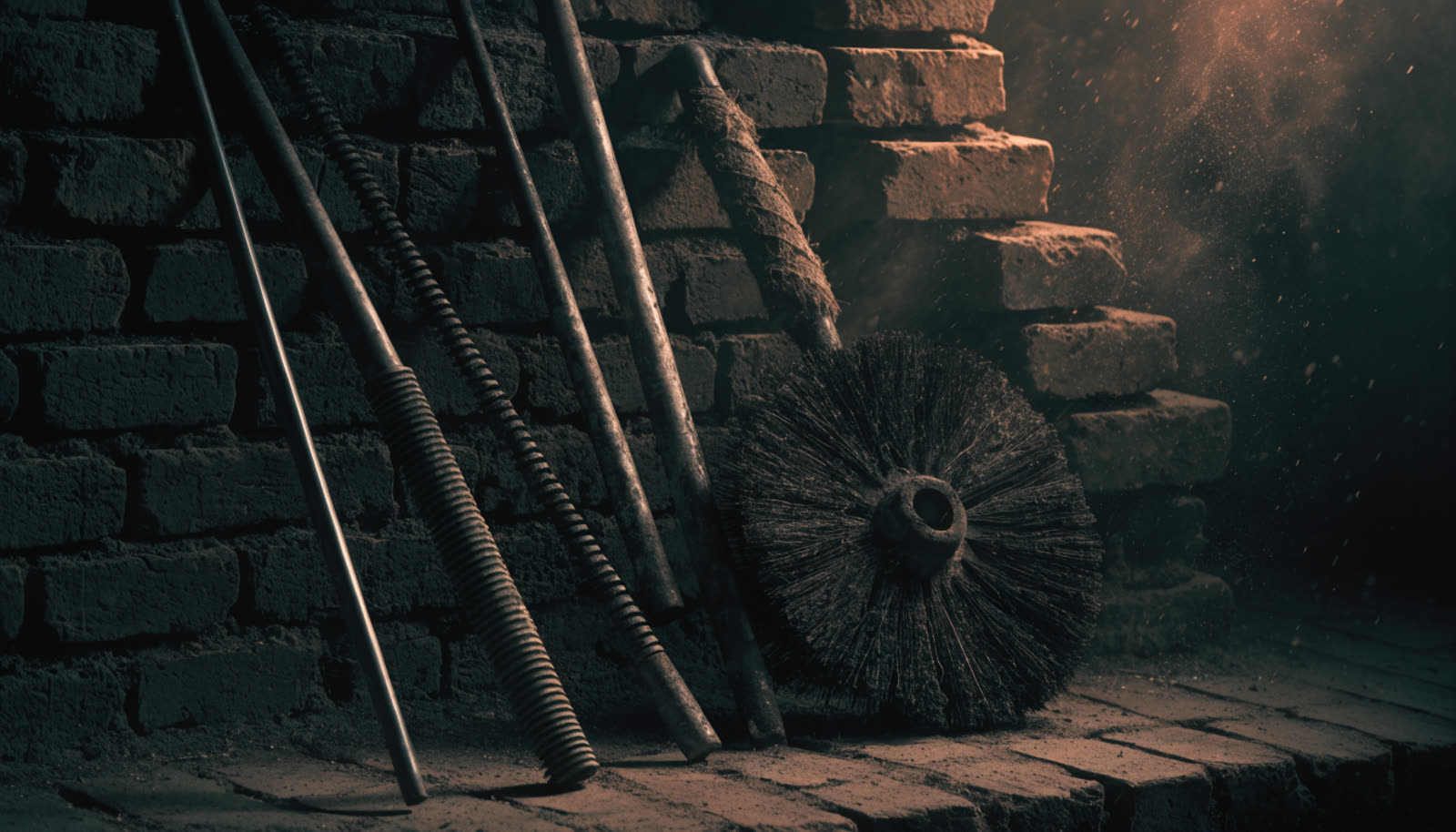
Sweeping is the trade this workshop is named for, and it is still the job we do most. A chimney that burns wood all season carries a little of every fire up the flue with it, and what the smoke leaves behind is soot and creosote: a black, tarry crust that narrows the throat of the chimney, sours the draft and, given enough seasons, can catch fire itself. A proper sweep takes all of that out and leaves the flue as clean as the day it was laid.
The work is plain and it is done plainly. Cloths get laid before a tool is lifted, the vacuum drones away the whole while, and the brushes work the stack's full height: firebox, smoke chamber, flue, and out at the cap. When the brushes come down, a tradesman's eye goes back up, because a sweep is also the best chance anyone gets to read the true state of a flue.
What a proper sweep involves
- Drop cloths over the hearth and the room, laid before the work starts, not after the first smudge.
- The flue, smoke chamber and firebox brushed through end to end, with the vacuum drawing the whole time.
- The damper worked, the cap sighted and the crown looked over while we are up there anyway.
- The soot leaves in our vacuum, not on your rug, and the hearth is left tidier than we found it.
Why Front Range flues foul quicker than folk expect
Colorado burns a long season. The nights turn cold in October and stay cold well into April, and a fireplace that gets lit most evenings lays down creosote faster than the calendar suggests. Slow, smoldering fires are the worst offenders: they cool the smoke, and cool smoke drops its tar on the way up the flue. If your fireplace works for its living, the brushes should go up once a year, and the no-charge inspection will tell you honestly whether it is time.
The signs a flue is asking
- A fire that sulks, smokes or will not draw the way it used to.
- A bitter, campfire smell in the room on damp days or warm afternoons.
- Black flakes or gritty crumbs turning up in the firebox.
- A crust inside the flue you can scratch with a fingernail.
Any one of those means the chimney is due. All of them together mean hold off lighting fires until it has been seen.
What a sweep costs
The rule at this counter is look first, price second. A tradesman sees the flue, then you get one number in writing, and the written number is the number. There are no dollar figures on this page because no honest sweep prices a chimney unseen: the pricing page explains how a price gets made here, and the first look never costs a thing.
Frequently asked about sweeping
How often should a chimney be swept?
A fireplace that burns regularly through a Colorado winter wants sweeping once a year. A flue that only sees a handful of fires can sometimes go longer, but it should still be looked at annually, because creosote is not the only thing that goes wrong up a chimney. The look costs nothing, so there is no reason to guess.
Does sweeping make a mess of the room?
Not when it is done proper. Cloths first, then tools: the vacuum keeps drawing for as long as the brushes are up, and every ounce of soot leaves the house in our equipment. If a sweep leaves a mark behind, the job was not finished.
What is creosote, and why does it matter?
Creosote is the tar that wood smoke leaves on a cool flue wall, and it burns. Let enough of it build and a stray spark can light the chimney itself, with the fire roaring inside your walls instead of your firebox. Sweeping takes the fuel away, which is why the old trades called it fire insurance you can sweep out with a brush.