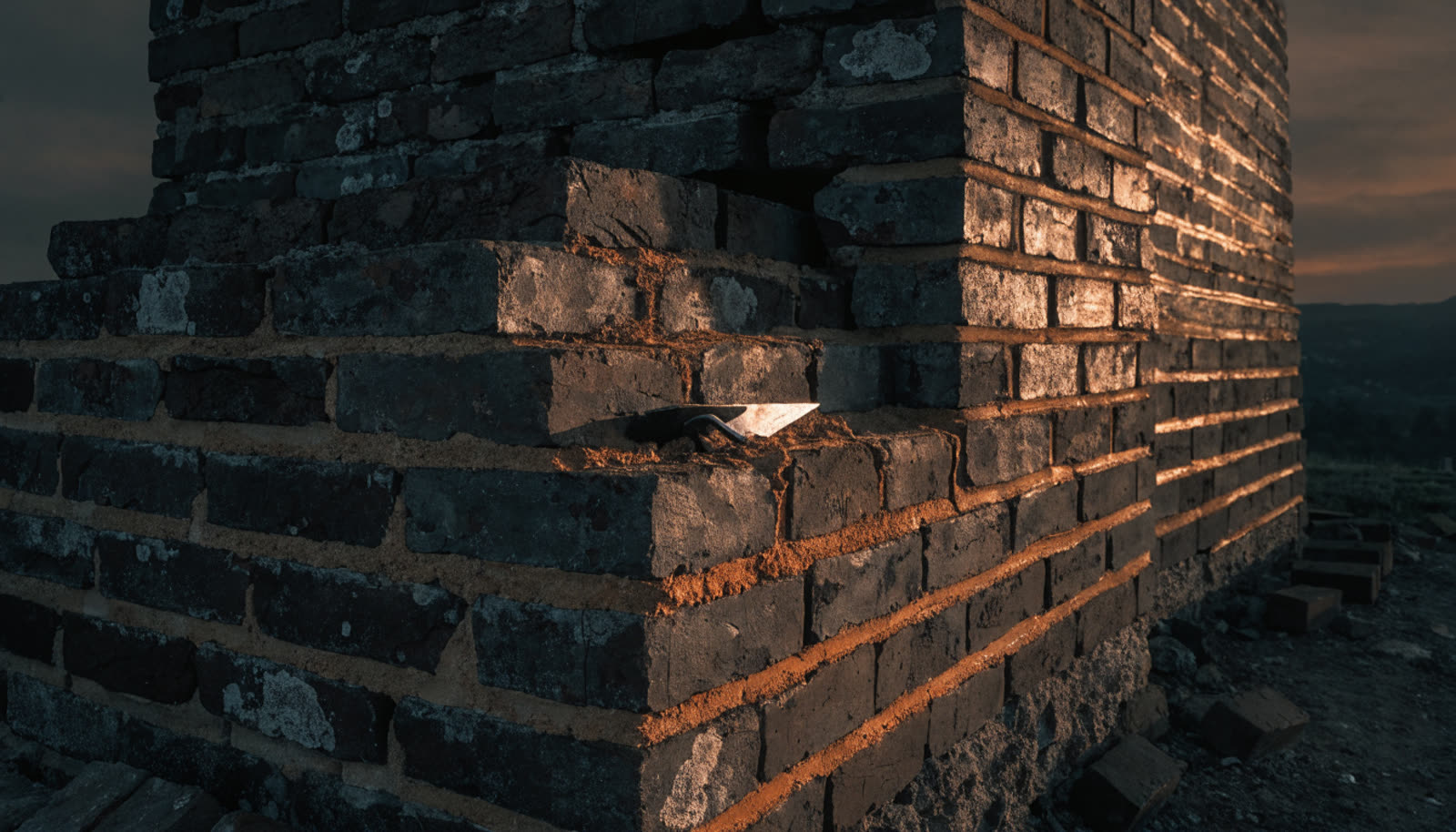
Arvada was raised on brick, and much of it has stood since the streetcar days. That old masonry is worth keeping: brick fired a century ago is often harder than anything on a pallet today. What fails is rarely the brick itself. It is the mortar around it, the crown above it and the water that finds its way into both. Chimney repair, done proper, is the craft of catching that failure early and mending it for keeps.
Our repair work runs from small honest fixes to full restoration: cracks chased out and filled, spalled and shattered brick cut free and replaced with units matched to the wall, water paths sealed where they enter, and leaning or rebuilt sections brought back true. The materials get chosen to suit the wall, not the invoice.
What Colorado weather does to a stack
The Front Range is hard country for masonry. Water soaks into brick and joints in the afternoon, freezes at night, and the ice pries the wall apart a little at a time. That freeze and thaw cycle can run dozens of times in a single winter here, and the chimney takes it worse than any other part of the house because it stands alone in the weather with no eaves to shelter it. Wind-driven snow, summer hail and the fierce dry sun all take their turn as well.
The signs masonry is ailing
- Brick faces flaking or popping off in shards, what the trade calls spalling.
- White mineral bloom across the stack, which means water is moving through the wall.
- A visible crack, a hollow joint or a lean you can sight from the yard.
- Grit, mortar crumbs or bits of clay tile turning up in the firebox.
Repair the old way, where the old way is better
The farmhouse and storefront stacks around Olde Town were laid with softer, lime-rich mortar, and they want repairs made the same way. Hard modern mortar smeared into old joints does more harm than good: it traps water and shoves the stress into the brick. We match the mix and the joint style to what the wall was built with. When the trouble is mostly in the joints, the right trade is tuckpointing and repointing; when the top of the stack is the trouble, see crown repair and recasting.
What repair costs
No two ailing stacks are alike, so nothing gets priced unseen. A tradesman looks first, the look is free, and then you get one written number that holds. The pricing page lays out how a price gets made at this counter.
Frequently asked about chimney repair
Is my old brick chimney worth repairing, or should it come down?
Nearly always worth repairing. Old brick is usually better fired than new, and a stack can be restored at the bench for far less than tearing it down and starting over. We would rather restore than replace, and we will tell you honestly on the rare day a chimney is truly past saving.
Why is my chimney leaking when the roof is fine?
Because chimneys make their own leaks. A cracked crown, hollow mortar joints, spalled brick or tired flashing will each walk water into the house on their own, and none of them show up on a roof inspection. The free look reads the whole stack and finds where the water actually enters.
Can you match the repair to the look of my old wall?
That is half the craft. Replacement brick gets chosen for size, color and hardness, and the mortar gets matched for color, softness and joint style. A repair done proper should be hard to point out from the sidewalk a year on.