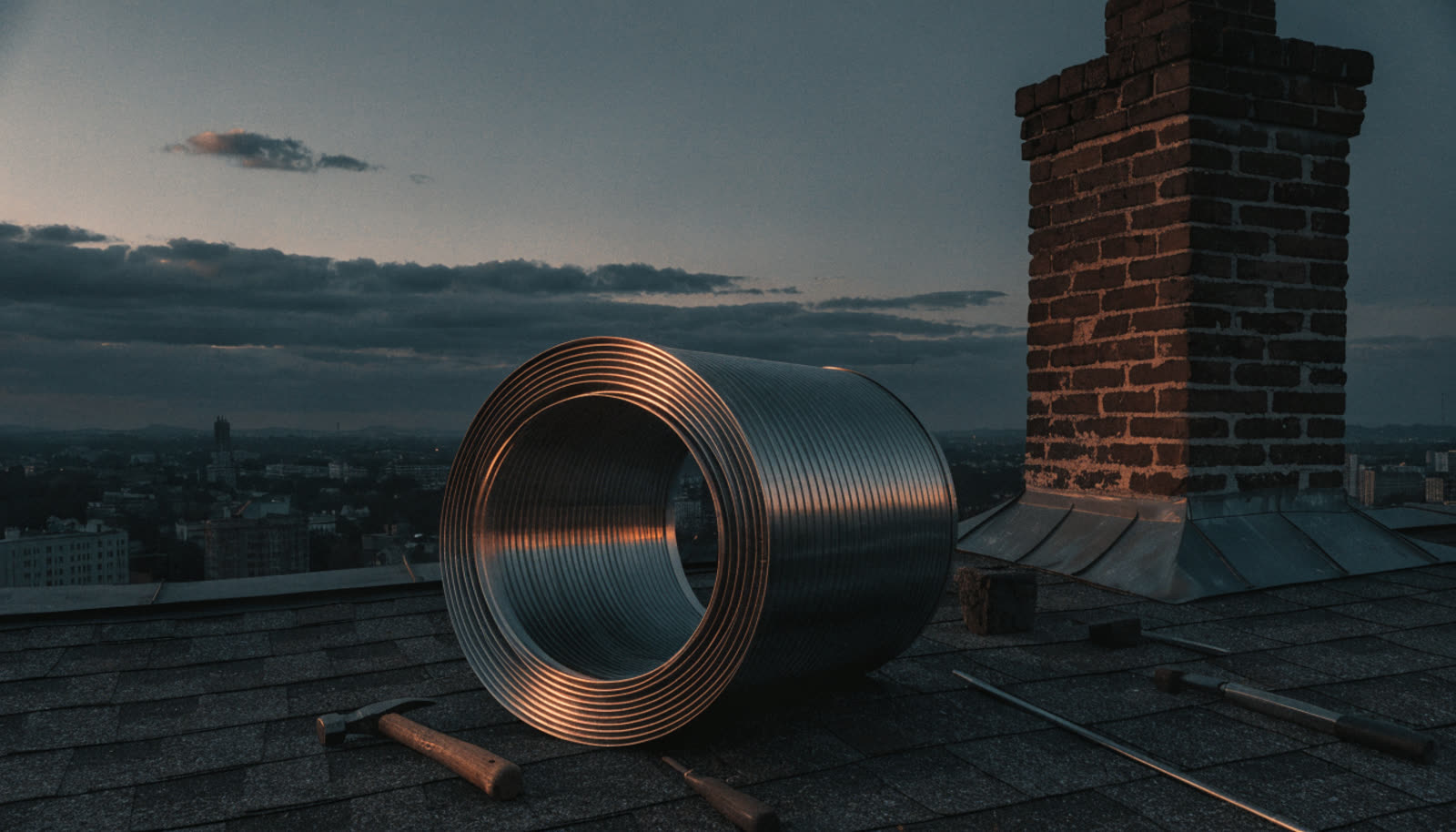
The flue liner is the throat of the chimney. It carries smoke, gases and heat up and out of the house, and it must be whole to do it. When the old clay tiles crack, shift or shed their joints, the chimney may still look fine from the curb while leaking flue gases into the walls. Relining gives that old stack a new throat: a stainless steel liner run the full height, top plate to appliance, sized to draw properly.
This is careful work and it is done carefully. The liner gets sized to both the flue and the appliance it serves, because a liner too big drafts as poorly as one too small. Where the draft wants help, the liner gets an insulation wrap, which keeps the smoke warm and moving and cuts down the creosote it leaves behind. And before the truck leaves, the draft gets proved, not presumed.
When a flue wants relining
- Clay tiles cracked, shifted or missing, the sort of thing the camera inspection finds.
- The appliance changed and the flue never did: a new insert, stove or furnace venting into an old oversized chimney.
- After a flue fire, which can shatter tiles from the inside where nothing shows outside.
- Smoke or odor seeping where it should never be, which means the flue is no longer holding its contents.
Why stainless steel
A stainless liner is one continuous path with no joints for gases to find, it stands up to heat and acid condensate, and it suits every fuel when sized right. It also hides entirely inside the old stack: from the street, your chimney keeps its face, and that matters in a town that keeps its old brick proudly.
Sized to the appliance, not the catalog
Matching flue size to appliance is the whole game. Wood wants one thing, gas another, and a fireplace opening has its own arithmetic. We measure, size and run the liner to suit what actually burns at the bottom of it. If you are changing what burns down there, read about gas insert fitting and fireplace installs, because the right time to reline is while that work is happening.
What relining costs
A reline is priced by the job in front of us: the height of the stack, the size of the flue, the appliance it serves and what the first look uncovers. You get one number, in writing, before the work starts, and the written number is the number. The look itself is free.
Frequently asked about relining
How do I know if my clay tiles have failed?
Mostly you do not, not from the hearth. Cracked and shifted tiles hide high in the stack where only a camera reaches. The honest signs from below are bits of orange tile grit in the firebox, a smoke smell in upstairs rooms, or a draft that has gone strange. The camera look settles it either way, and it costs nothing.
Will a liner change how my fireplace looks?
Not from the room and not from the street. The liner lives entirely inside the old flue. What changes is what you cannot see: the draft steadies, the fire behaves, and the gases go where gases should.
Does a new liner need sweeping like the old flue did?
Yes, a liner collects soot and creosote the same as any flue, though an insulated liner tends to collect it slower. Keep the annual sweep on the calendar and the liner will outlast the roof over it.