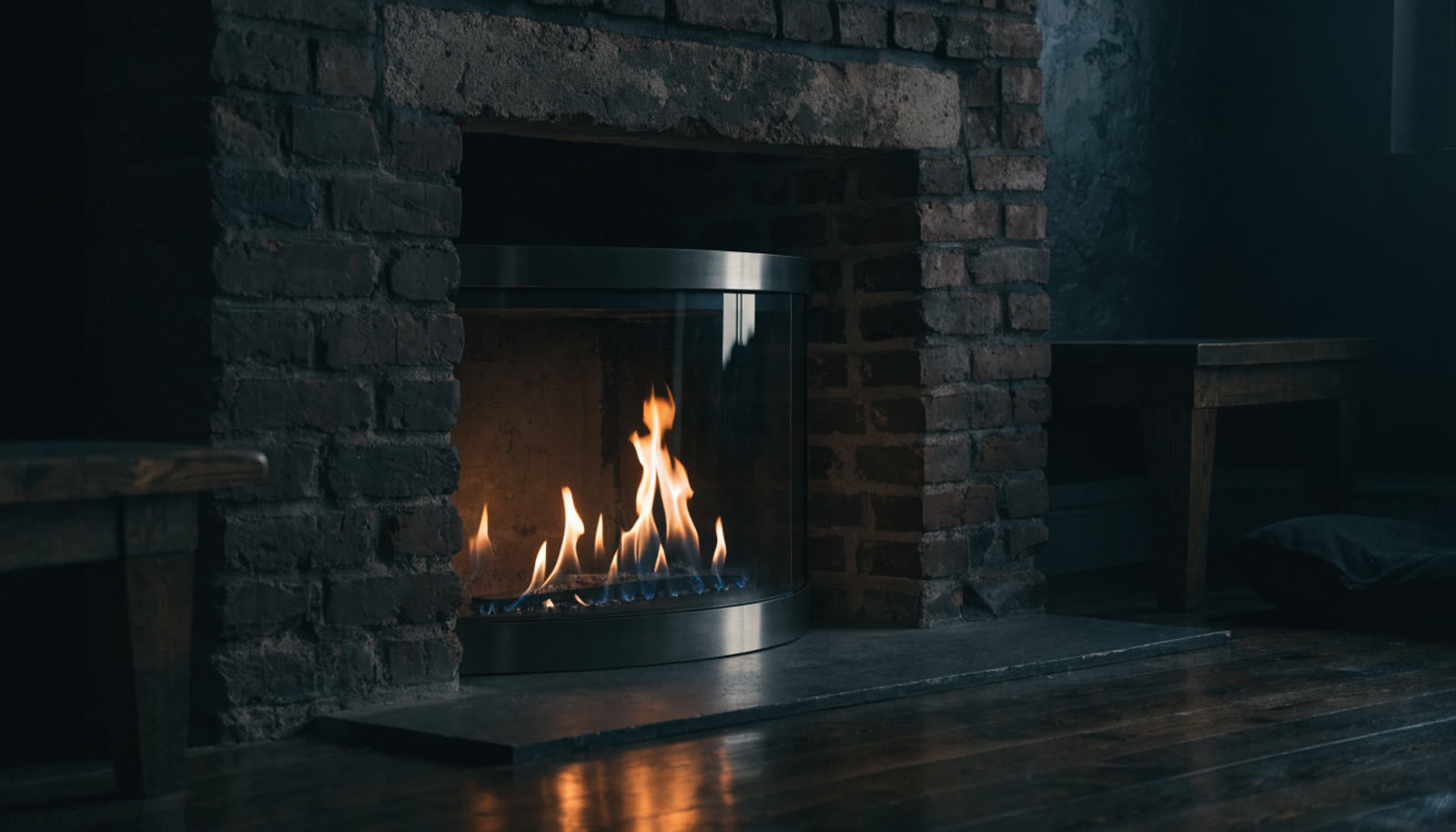
There is a certain kind of evening that wants a fire before the coat is even hung, with no appetite for hauling logs to earn it. That is the whole case for a gas insert: a sealed, efficient firebox that slides into the open hearth you already own and gives you real heat at the turn of a knob. The room keeps its face, the chimney keeps its place, and the fire becomes something you switch on rather than build.
The craft is in the fitting. An insert wants sizing to both the firebox it sits in and the room it heats: too small and it decorates rather than warms, too large and it roasts you out of the parlor. Then the venting must be run right, the full height of the flue, sized to the unit, sealed and tested. We fit it, fire it, and show it to you working before we call the job done.
Why old hearths love inserts
An open masonry fireplace is a glorious thing and a wasteful one: most of the heat it makes goes straight up the flue, and when the fire dies the flue keeps pulling warm room air out all night. A sealed gas insert turns that arithmetic around, burning cleanly and pushing its heat into the room. For the old brick hearths around Arvada it is often the kindest modernization there is: nothing worth keeping gets torn out, and an original surround can stay exactly as it has always looked.
What the fitting involves
- The firebox measured and the insert sized to the box and the room, not to a brochure.
- The venting run the full height of the stack and sealed, with the flue lined to suit the appliance where it needs it.
- Gas connection made right and checked twice, then the unit fired and proved.
- A walkthrough before we leave: controls, care and what a healthy burn looks like.
Because the venting is half the job, insert fitting often pairs with a new flue liner, and the right time to do both is the same visit. If the old firebox needs mending first, that is firebox work, and we will tell you plainly if it does.
What an insert costs
The unit, the venting and the state of the existing chimney all move the number, so the number gets set after a look and set in writing. The look is free, and the pricing page explains how the quote gets made. The written number is the number.
Frequently asked about gas inserts
Can an insert go into any fireplace?
Most sound masonry fireplaces will take one, and many factory-built fireboxes will too, but the box, the flue and the clearances all have to be read first. That is precisely what the free look is for: we measure, check the flue, and tell you what will fit and what it will take.
Will it still look like a real fire?
The good units have come a long way: proper flame, glowing ember bed, and the original surround untouched around it. What changes is the labor. No logs, no kindling, no morning ash pan, and heat that arrives when you do.
Does a gas insert still need the chimney serviced?
Yes, though the rhythm changes. The venting wants an annual look to stay sealed and drawing right, even though gas burns far cleaner than wood. Keep the yearly inspection on the calendar and the insert will give you quiet decades.