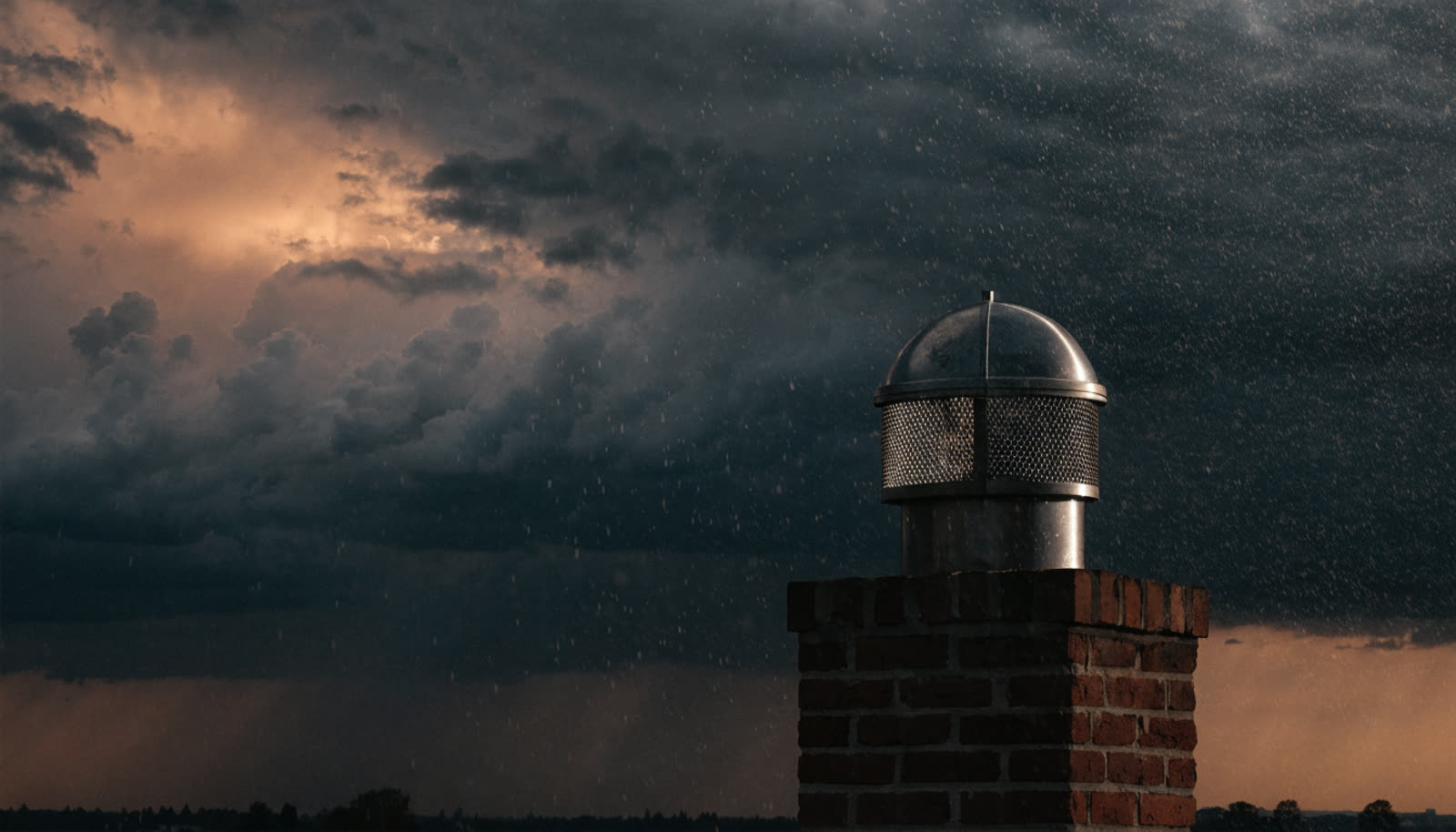
The cap is the smallest piece of hardware on the chimney and it earns its keep better than any other. A well-fitted cap turns away rain, sleet and snow, keeps sparks from riding the draft onto the roof, and shuts the door on every bird and squirrel that fancies your flue for a winter address. A missing or failing cap, meanwhile, leaves the flue standing open to the sky like a rain barrel.
Our caps are measured at the flue, not guessed from the truck. Stainless steel or copper, to suit the house; a spark screen worked into the fit; the whole thing fastened square and sealed against the wet. A cap fitted proper should sit through a Front Range windstorm without a rattle and come back off with a wrench, not a pry bar, when the flue needs sweeping.
What a cap does all day
- Sheds rain and snowmelt that would otherwise run straight down the flue to the damper and firebox.
- Screens out birds, squirrels and raccoons, and the nests they build where nests should never be.
- Arrests sparks before they reach the roof or the neighbor's cottonwood.
- Steadies the draft in a gusting wind, which this county has never run short of.
Repair or replace, told honestly
A loose cap can often be refastened and resealed, and we will say so when that is the whole job. A rusted, undersized or storm-bent cap wants replacing, because a cap that half fits is barely better than none. If the trouble runs below the cap into the masonry it sits on, that is crown work, and the two are often mended in the same visit since the ladder is already up.
Shrouds and the look of the thing
On some houses the cap is part of the architecture: a shroud that crowns the stack and finishes the roofline. We fit those too, sized and mounted so the decorative shell and the working screen underneath each do their job. The hardware shelf shows the sort of caps and shrouds we stand behind and fit ourselves.
What a cap costs
Caps vary with flue size, metal and mounting, so the price gets set the same way everything here does: a look first, then one written number that holds. Fittings are quick work and often ride along with a sweep or the free inspection. The pricing page explains the arithmetic.
Frequently asked about caps
Do I really need a cap on my chimney?
Yes, and it is the cheapest yes in this trade. An open flue takes on water every storm, and water is the slow ruin of every chimney: rusted dampers, spalled brick, a rotten smoke shelf. One fitted cap spares you all of it.
Why did my last cap blow off?
Almost always because it was sized from a catalog instead of measured at the flue, or fastened to crumbling masonry. A cap wants a true measurement and sound material to grip. If the crown it mounts to is failing, we mend that first, then fit the cap, so the fix actually lasts.
Can a cap stop animals from getting in?
A screened cap shuts the flue to wildlife entirely, and it is the permanent half of every animal removal we do. The creature goes out unharmed, the screen goes on, and the matter stays settled.