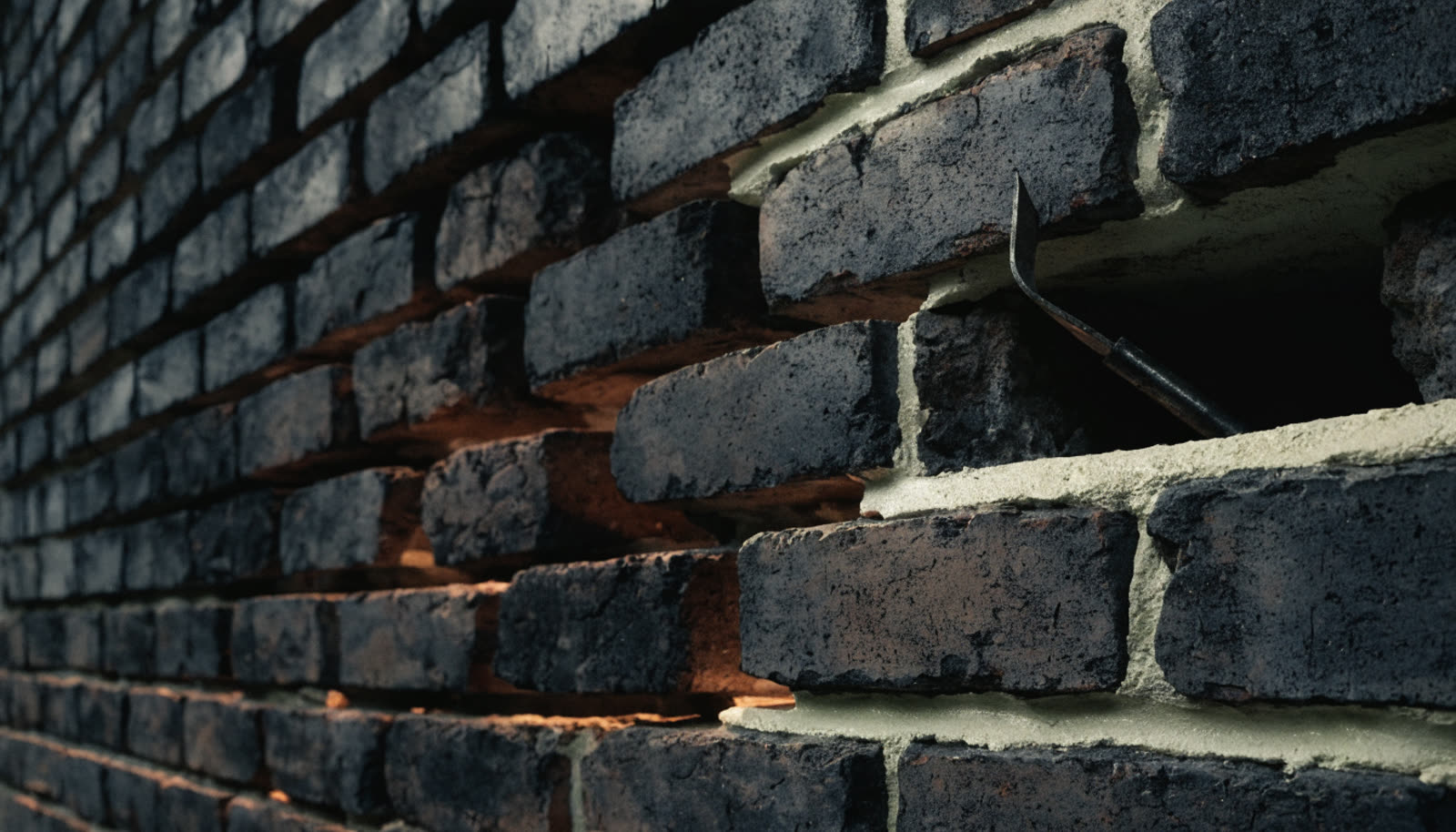
Mortar is the part of a wall that is designed to wear. The joints take the weather, the movement and the freeze so the brick does not have to, and they give themselves up slowly in the bargain. That is not a flaw; it is the arrangement. But once joints go soft, sandy or hollow, water walks straight into the wall and winter does the rest. Tuckpointing is the quiet trade that renews the bargain: the tired mortar comes out, fresh mortar goes in, and the wall gets another generation of standing.
It is handwork here, done the old way where the old way is the better way. Joints get raked out by hand to sound mortar, never ground out carelessly to wounded brick. The new mix gets matched to the wall: its color, its softness, its joint style. Then it is packed tight and struck clean, joint by joint, until the repair reads as part of the wall rather than a scar across it.
Why matching the mortar matters
The brick around Olde Town and the older blocks of Arvada was laid with softer, lime-rich mortar, and it wants repairs in kind. Hard modern cement mortar packed into old joints is the classic well-meant ruin: it is stronger than the brick around it, so the wall's movement and moisture have nowhere to go but through the brick faces, and the brick starts spalling within a few winters. Matching softness is not nostalgia. It is engineering, done with a trowel.
The signs joints are asking
- Mortar you can rake out with a house key, gone soft or sandy.
- Hollow, receded joints with the brick edges standing proud.
- Daylight or gaps showing between courses.
- Damp patches inside, or white mineral bloom outside, where water is moving through the wall.
Chimneys first, but not chimneys only
The chimney takes the weather hardest, standing alone above the roofline, so it usually asks first. But the same bench does walls, planters and porch piers when the joints call for it. On a chimney, repointing pairs naturally with crown work and masonry restoration, and the free look will tell you honestly which of the three your stack actually needs, if any.
What repointing costs
The price follows the wall: how many joints have failed, how high the work sits, and how careful the match must be. One look, one written number, and the number holds. The whole method is laid out on the pricing page.
Frequently asked about tuckpointing
How do I know if my mortar has failed?
Try the key test: drag a house key firmly along a joint. Sound mortar shrugs it off with a faint scratch. Failed mortar carves out like damp sand. If joints are carving, receding or showing daylight, the wall is asking, and the free look will tell you how loudly.
Will the new mortar match the old wall?
That is the craft, and we take it seriously: color, softness and joint profile all get matched, and on heritage brick we mix to suit the original lime-rich mortar rather than forcing modern cement into an old wall. A repoint done proper is hard to find from the sidewalk a season later.
Is tuckpointing really worth it, or should the wall be rebuilt?
Repointing tired joints is the single best money you can spend on old masonry, and it is a fraction of a rebuild. Caught in time, it stops the water, steadies the wall and saves the brick. Left too long, spalled brick and shifted courses turn a repoint into a restoration. Sooner is cheaper, every time.