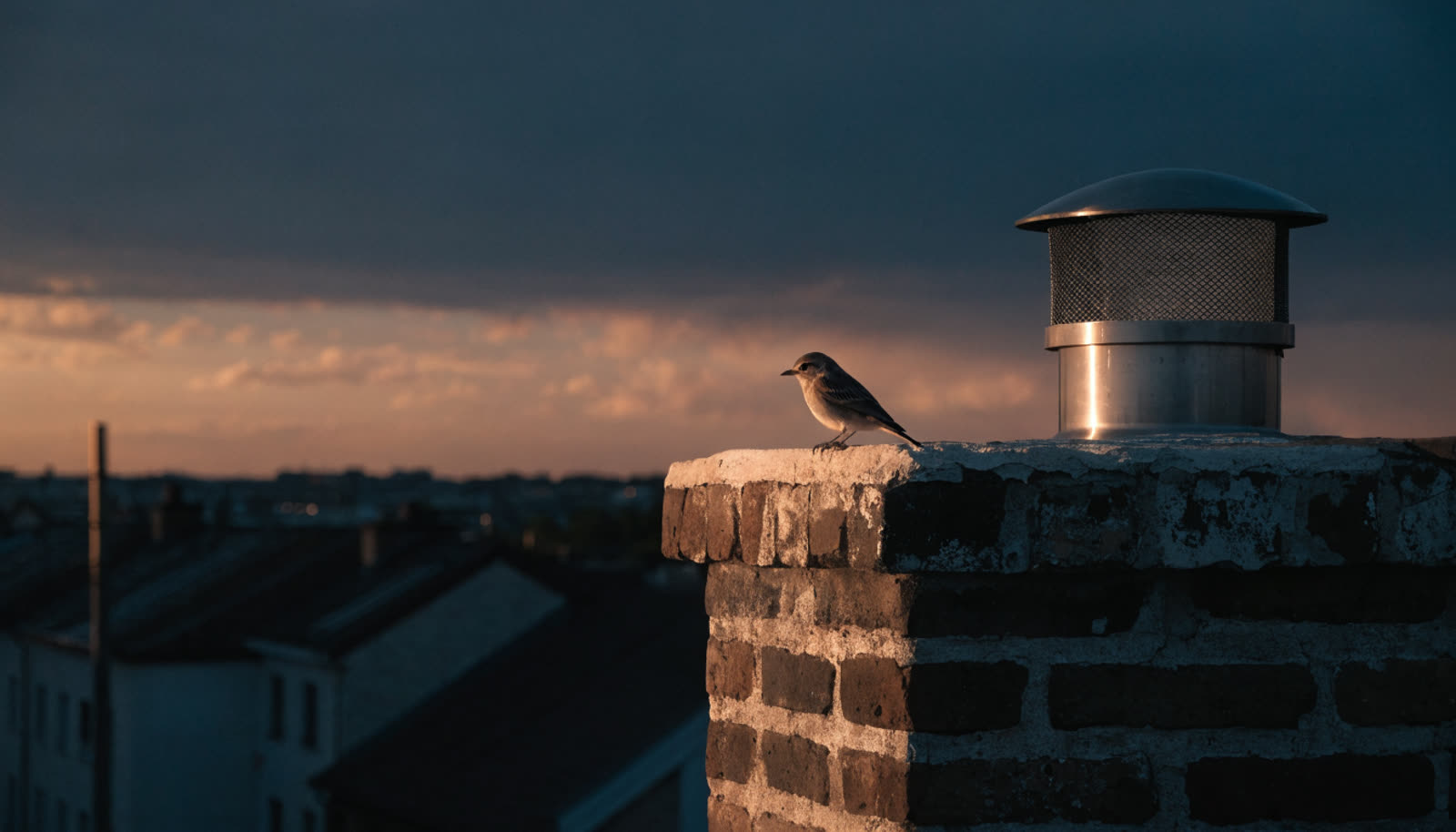
To a bird, a squirrel or a raccoon, a chimney is simply the best hollow tree on the block: high, sheltered, warm at the base and safe from everything except the fellow with the ladder. Every spring and every autumn, the flues of Arvada take in lodgers. Our job is to see them back outside unharmed, clear out what they left behind, and shut the door so the arrangement does not repeat.
The method is patient and it is gentle. Gentle hands and no harm done is the rule of the bench: the animal comes out alive and goes back to its outdoor living, the nest and leavings come out of the flue, the entry gets closed properly, and a screened cap goes on to end the matter. We do not poison, and we do not seal an animal inside to save a trip, because a carcass in a flue is a cruelty and a smell you would not wish on anyone.
The signs of a lodger
- Scratching, scrabbling or chirping from inside the chimney, most often at dawn and dusk.
- That nest smell: musty, gamey, worse on damp days, drifting from the fireplace.
- Stray twigs, leaves or droppings turning up in the firebox.
- Something seen slipping under the cap at dusk, or a bird fluttering behind the damper.
A word on nesting birds
Some chimney tenants are protected by law while they are nesting, and certain birds cannot be moved until the young have flown. When we find an active protected nest, we say so honestly, make the fireplace safe to wait, and come back to clean and cap the flue the moment the family has gone. It costs a little patience once, and the screened cap makes sure it never has to happen twice.
The cleanup matters as much as the catch
A vacated nest is not a finished job. Nesting material is dry tinder stacked in a fire path, and what a lodger leaves behind can carry pests and foul the draft. So the flue gets cleared and swept after the removal, the same discipline as a proper sweep, and the screened cap goes on as the permanent half of the fix. If the animal got in because the crown or masonry is failing, the free look will have found that too, and you will hear it plainly.
What removal costs
Every removal is its own small story: what moved in, how far down it sits, and what it did to the flue while it lodged there. So the price gets set the honest way, after a look, in writing, and the written number holds. The method is laid out on the pricing page.
Frequently asked about animals in the flue
There is something alive in my chimney right now. What do I do?
Keep the damper shut so it stays out of the room, do not light a fire, and do not try to smoke it out; that only injures the animal and fouls the house. Get in touch with the shop, tell us what you hear, and we will get the ladder there promptly.
Will the animal be hurt?
No. The whole point of doing this trade humanely is that the lodger leaves alive and unharmed, the way it came. We would rather spend an extra hour coaxing than a minute harming, and the screened cap afterward protects the animals as much as the chimney.
How do I make sure nothing moves in again?
A screened cap, fitted proper, ends the matter. It shuts the flue to wildlife while the smoke passes freely, and it is the single fix that turns animal removal from an annual event into a story you tell once.